About me
Hi, I am Jakub Štenc
I am a researcher focusing on ecology. I am interested in pollination, pollen transfer, floral ecology, pollinator behaviour and plant-pollinator interactions on the community level.
Welcome on my websites where you can find some informations about me and my work.
I am currently based at CREAF, Autonomous University of Barcelona, Spain, working on pollinator sharing among plants, within project funded by GACR POSTDOC INDIVIDUAL FELLOWSHIP OUTGOING.

Curriculum vitae
Name and date of birth
- Mgr. Jakub Štenc, Ph.D.
- Born: 4th March 1996 in Mladá Boleslav, Czechia
Current position
Employee at the Department of Zoology, Faculty of Science, Charles University with project GACR POSTDOC INDIVIDUAL FELLOWSHIP OUTGOING awarded in 2024, focusing on pollinator sharing among plant species
Currently hosted postdoc at CREAF within the GEIP group of Jordi Bosch
Contact
jakubstenc at gmail.com
+420 774 553 734
Education
2015-2018 - Bachelor’s degree in biology, Faculty of Science, Charles university. Thesis: Pollination efficiency as a function of plant spatial aggregation and pollinator functional traits. Graduated.
2018-2020 - Master’s degree in Botany, specialization Geobotany, Faculty of Science, Charles university. Thesis: Changes in pollinator behaviour under different plant spatial aggregation. Graduated with distinctions.
2020-2024- Ph.D. in Botany, Faculty of Science, Charles university. Thesis: Factors influencing pollen carryover effectiveness. Graduated cum laude.
Work
2019 – 2021 - Part-time employment as a technician at the Department of Botany, mainly managing the lab and reconstruction related activity, 0.1 FTE
2023 – 2025 - Employment on the INTER-ACTION-LUAUS23 project led by Petr Sklenář focusing on Pollination in tropical mountains, 0.5 FTE
2024 – 2025 - Employment on Institute of Botany of the Czech Academy of Sciences
Grant support
2018-2021 - Co-investigator of grant project from Grant Agency of Charles University: Plant population dynamics under anther smut epidemy and influence of pollinators on the rate of disease spread (1193619)
2019-2022 - Main investigator of grant project from Grant Agency of Charles University: Flower traits as drivers of pollinator visitation behaviour (842120)
2021-2023 - Main investigator of grant project from Grant Agency of Charles University STAR: Do the plant pollen presentation schedules fit pollinator diurnal activity? A test of the Pollen Presentation Theory (0016935)
2025-2028 - Main investigator of grant project granted by Grant Agency of Czech Republic POSTDOC INDIVIDUAL FELLOWSHIP OUTGOING: Long-term spatiotemporal dynamics in a plant-pollinator community and consequences for pollen transfer in a changing world (25-17193O)
Educational stays abroad
2019 - 6-months Erasmus study abroad at University of Tartu (Estonia)
2022 - 2-months internship at Rey Juan Carlos University under supervision of Marcos Méndez
2023 - 1-month internship at University of Granada under supervision of Rocío Peréz Barrales
Conferences
2018 - SCAPE, The Scandinavian Association for Pollination Ecologists, Blessington, IRL (poster)
2019 - Kostelecké inspirování, CZU, CZE (oral presentation)
2019 - SCAPE, The Scandinavian Association for Pollination Ecologists, Höör, SWE (oral presentation)
2020 - EcoFlor conference, Bilbao, ESP (oral presentation)
2021 - EcoFlor online conference, Madrid ESP (organization and moderation of online discussion)
2022 - EcoFlor conference, Maó, ESP (oral presentation)
2022 - SCAPE, The Scandinavian Association for Pollination Ecologists, Warsaw, POL (oral presentation)
2023 - EcoFlor conference, Sevilla, ESP (oral presentation)
2024 - EcoFlor conference, Coimbra, POR (oral presentation)
Teaching experience
R for life, Charles University in Prague, Czechia (2021, 2022; under leading of Martin Weiser and Tomáš Herben)
Practical course on Plant Morphology, Charles University in Prague, Czechia (2020; under leading of Martin Čertner)
Field course on Botany, Charles University in Prague, Czechia (2021; under leading of Jan Šťastný)
Field course on Phytocenological and Plant-population Methods, Charles University in Prague, Czechia (2021; under leading of Tomáš Koubek)
Supervised students
Alice Haveldová (Bachelors, supervision, finished)
Karolína Chvojková (Bachelors, supervision, finished)
Natálie Hanusová (Bachelors and Masters, supervision, finished)
Klára Doksanská (Bachelors, supervision, ongoing)
Kateřina Příbramská (Bachelors, supervision, ongoing)
Aneta Hynčicová (Bachelors, supervision, ongoing)
Petr Švanda (Bachelors and Masters, supervision, ongoing)
Eva Matoušková (PhD, supervision, ongoing)
Zuzana Matějková (Bachelor and Masters, co-supervision, never finished, never forgotten)
Lucie Holzbachová (Masters, co-supervision, ongoing)
Field experience
2016-2017 - field work with Insect communities’ group (main researcher Robert Tropek)
2018-2020 - field work experiments with Klará Koupilová and her project focused on plant pathogens transmitted by pollinators
2017-2023 - field work for master and PhD thesis in Czech Republic
2023 - 4 months of fieldwork in Andes, Ecuador
Languages and skills
Czech (native)
English (fluent)
Spanish (advanced beginner)
driving license A1 and B
Science popularization
2018 - 2020: guide in Botanical Garden of Faculty of Science, Charles University
2018 - 2024 – Co-author of tasks for biological competition Biozvěst
2019 - Co-author of exhibition “Intimní život rostlin” (The Intimate Life of Plants) in Botanical Garden of Prague (with Doc. RNDr. Lubomír Hrouda, CSc., RNDr. Zdeněk Janovský, Ph.D, RNDr. Jan Ponert PhD. and Mgr. Ludmila Němcová).
2020 - Co-author of popular science article about anther smuts (Živa)
Publications
Janovský, Z., & Štenc, J. (2023). Pollinator community and generalisation of pollinator spectra changes with plant niche width and local dominance. Functional Ecology, 00, 1–10. https://doi.org/10.1111/1365-2435.14439
Matoušková, E., Štenc, J., & Janovský, Z. (2023). Innate preferences of Eristalis tenax L. (Syrphidae) for flower colour, size and symmetry are more intricate than the simple additive model. Biological Journal of the Linnean Society, 140(1), 110–119. https://doi.org/10.1093/BIOLINNEAN/BLAD035
Štenc, J., Janošík, L., Matoušková, E., Hadrava, J., Mikát, M., & Janovský, Z. (2023). Pollinator visitation closely tracks diurnal patterns in pollen release. American Journal of Botany, e16179. https://doi.org/10.1002/AJB2.16179
Koupilová, K., Štenc, J., & Janovský, Z. (2022). Pollinators adjust their behavior to presence of pollinator-transmitted pathogen in plant population. Behavioral Ecology, 33(2), 319–328. https://doi.org/10.1093/BEHECO/ARAB153
Koupilová, K., Štenc, J., & Janovský, Z. (2021). Pollen dispersal is driven by pollinator response to plant disease and plant spatial aggregation. Basic and Applied Ecology, 50, 77–86. https://doi.org/10.1016/j.baae.2020.10.0072016-2017
Research topics
FLOVID: FLOwer VIsitor Database
Who are the pollinators of wild plants? What are the global patterns in plant-pollinator interactions? What does shape the composition of pollinator spectra? These are fundamental questions that surprisingly remain largely unanswered—gaps in our knowledge that I aim to address. So far, we focused on
- The majority of plants had either muscid-, hoverfly- or nitidulid-dominated or completely generalised pollinator spectra.
- Among such plants, higher local dominance increased the proportion of opportune muscids in pollinator spectrum, while hoverflies showed the opposite pattern.
- Honeybees although rather infrequent in pollinator spectra also showed a strong preference for locally dominant plant species.
- Synthesis: The composition of a plant’s pollinator spectrum is not independent of other aspects of the plant’s life history, namely niche width and the ability to dominate the community.
- Wider plant species niches result in more generalised pollinator spectra, supporting our hypothesis that habitat generalists are less prone to specialisation on particular pollinator groups.
- Conversely, the ability to dominate local plant communities influenced pollinator spectra mainly through specific responses of individual pollinator groups.
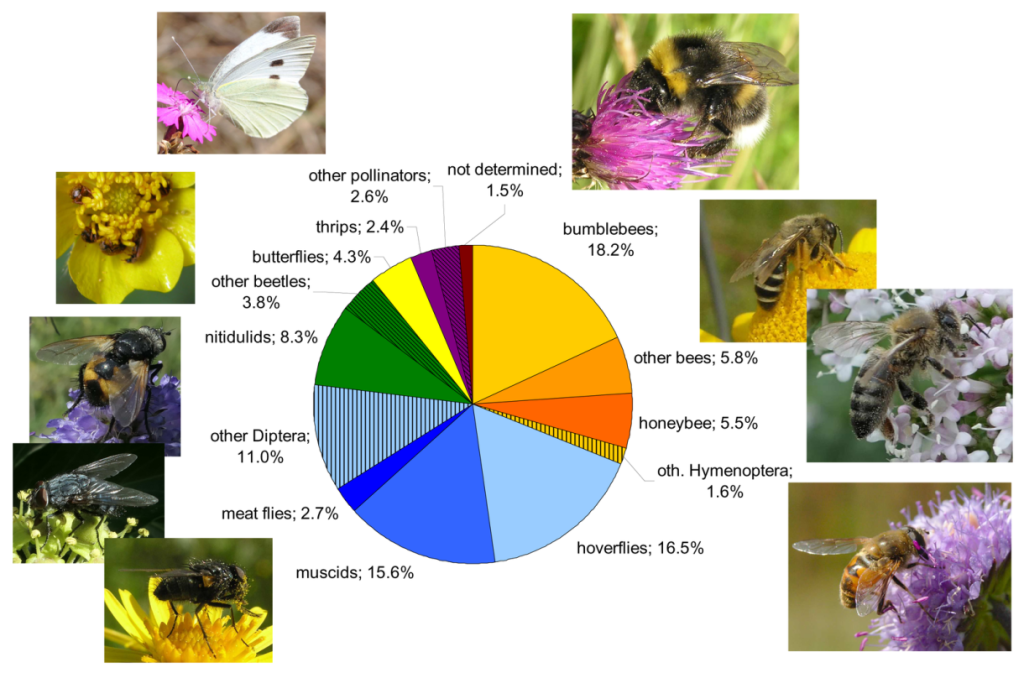
If you are interested, you can find more in following publication:
Janovský, Z., & Štenc, J. (2023). Pollinator community and generalisation of pollinator spectra changes with plant niche width and local dominance. Functional Ecology, 00, 1–10. https://doi.org/10.1111/1365-2435.14439
_na_bezu_cehbdi2.jpg)
Pollen transfer
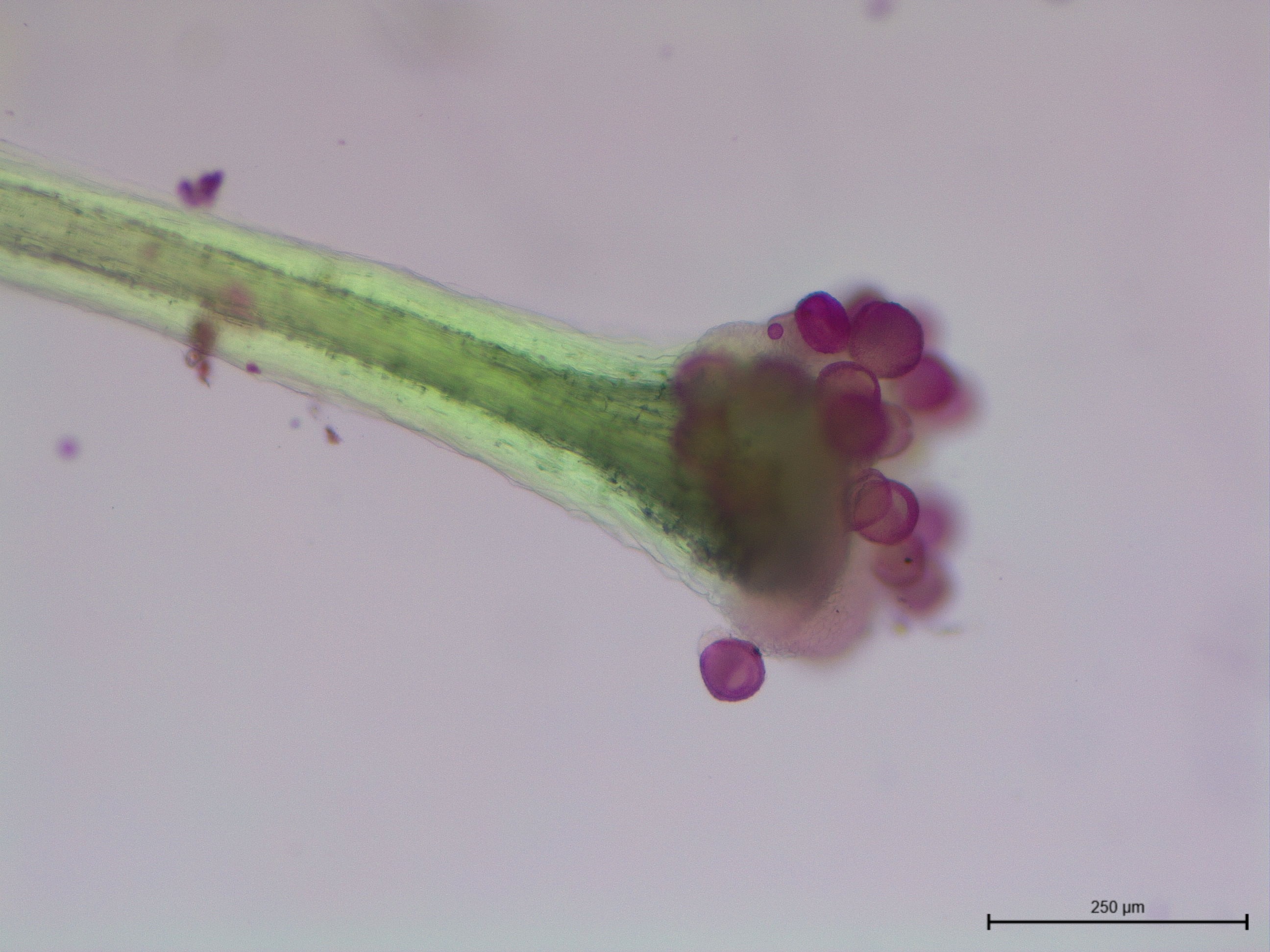
How is pollen transferred? How much pollen grains is successfully delivered to stigma? And how much is lost to reproduction forever? These are the questions I am interested to investigate. In recent years, we focused with my collaborators on the pattern of pollen release from flowers. We found out that plants may time the release of the pollen, which then affects timing of the plant-pollinator interaction, structuring the plant-pollinator network. You can read more in:
- Štenc, J., Janošík, L., Matoušková, E., Hadrava, J., Mikát, M., & Janovský, Z. (2023). Pollinator visitation closely tracks diurnal patterns in pollen release. American Journal of Botany, e16179. https://doi.org/10.1002/AJB2.16179
Pollinator sharing among plants
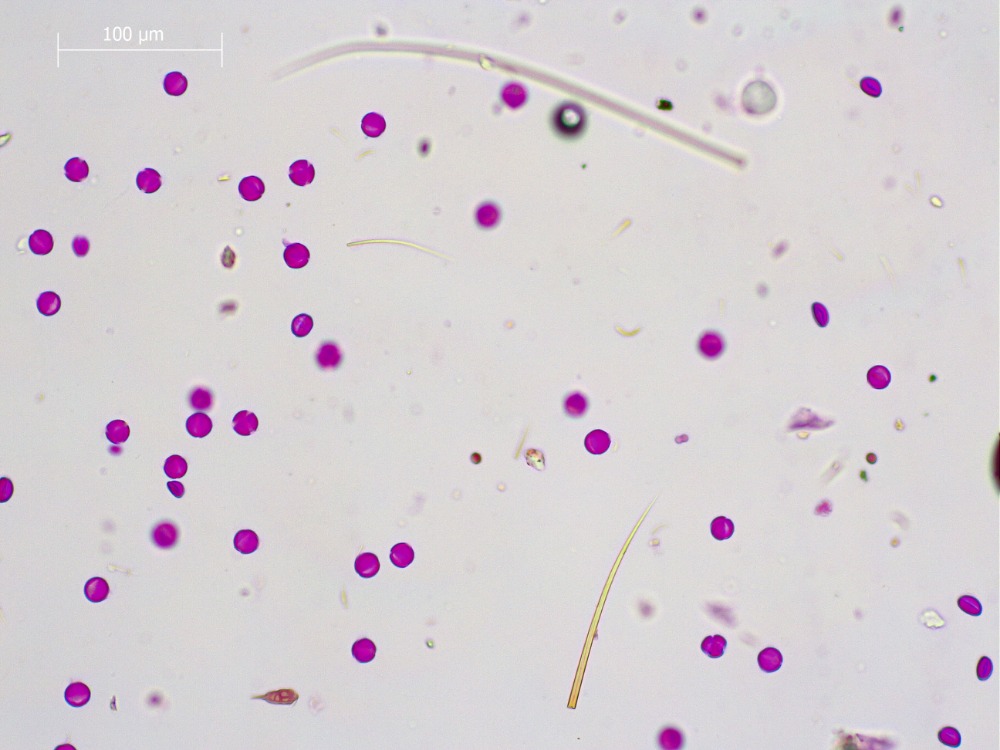
Plants often share multiple pollinators, but how does this affect pollen transfer? How do these plants coexist? Do they possess mechanisms to mitigate heterospecific pollen transfer? This is the topic I plan to focus on in the coming years during my postdoc in Barcelona. Currently, the following topics for bachelor’s and master’s thesis are available:
Pollinator behaviour
How does colour, size and shape of the flowers affect pollinator decision to visit flower? How does these traits affect pollinator constancy?
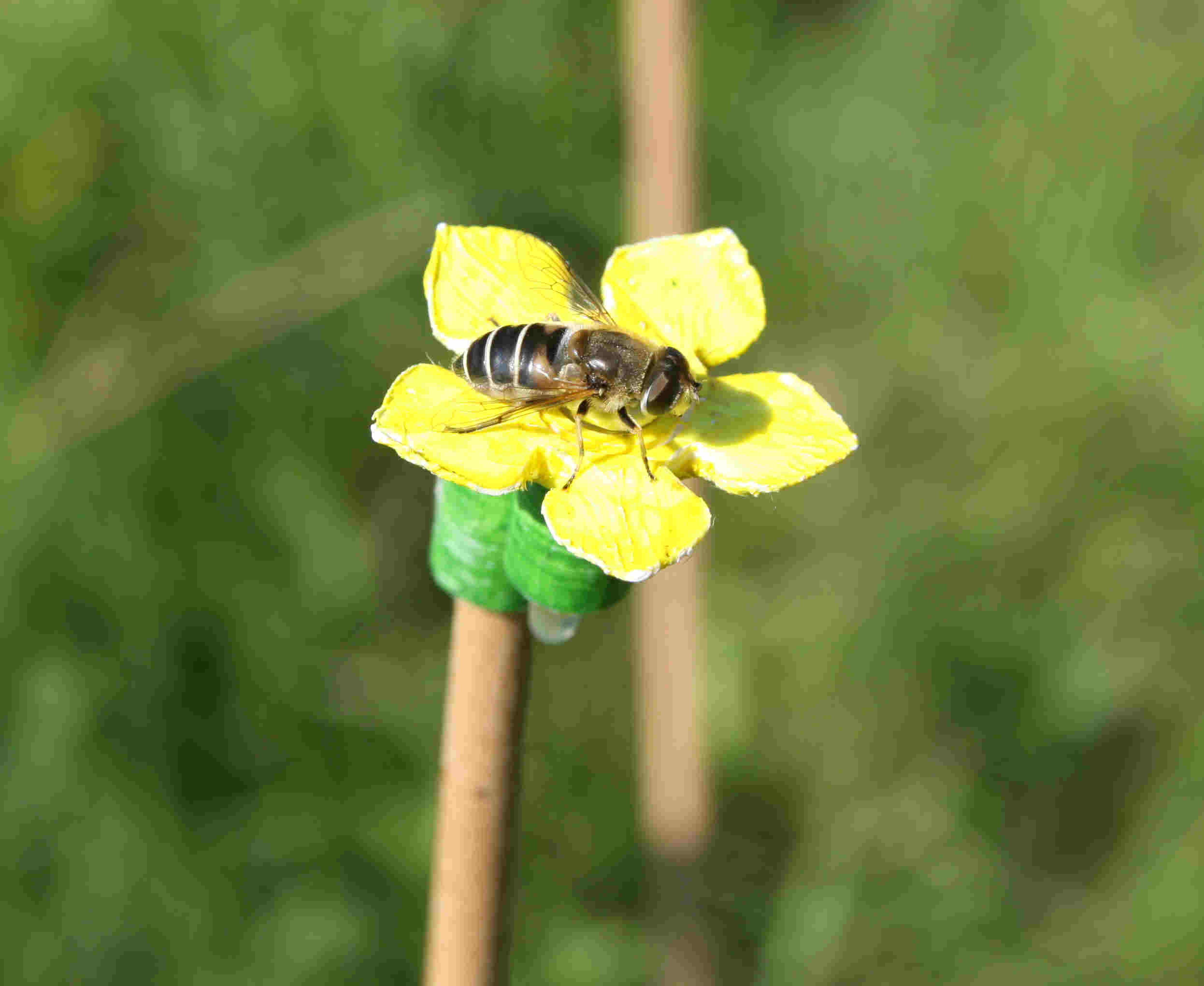
To study pollinator behaviour, we use both artificial flowers (made on 3D printer) and real flowers. We then present them to pollinators and record their decision. Currently we studied hoverfly Eristalis tenax, which is possible to breed and thus find difference between naive and experienced individuals. You can read more about preferences toward different flower traits in our article:
- Matoušková, E., Štenc, J., & Janovský, Z. (2023). Innate preferences of Eristalis tenax L. (Syrphidae) for flower colour, size and symmetry are more intricate than the simple additive model. Biological Journal of the Linnean Society, 140(1), 110–119. https://doi.org/10.1093/BIOLINNEAN/BLAD035
Currently, the following topics for bachelor’s and master’s thesis are available:
Pollinators of Handrkov
A long-term field research project based in the meadow near Handrkov. The main goal is to investigate relationships between plants, their pollinators, and pollinator parasites. We run a series of experiments, some of which have been ongoing since 2011, to understand the stability of these relationships and what influences them in a meadow ecosystem. The project also serves as a meeting point for people interested in field research.